
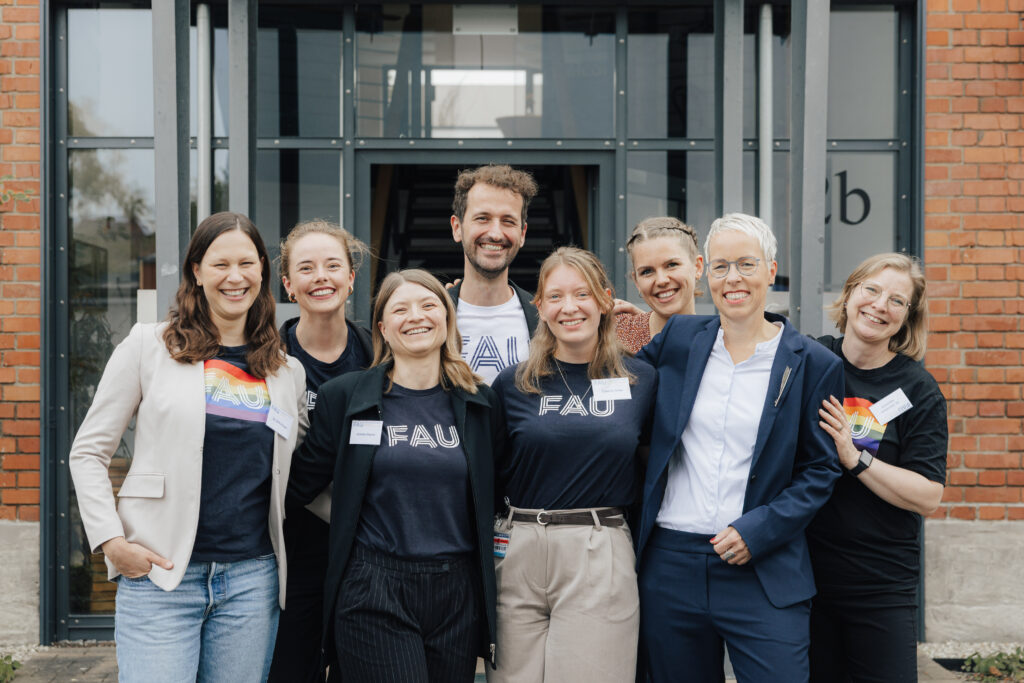
FAU opens new Interdisciplinary Psychotherapy Outpatient Clinic
Mental disorders are on the rise, but there continues to be a shortage of options for therapy, and specialized treatments in particular. The Chair of Clinical Psychotherapy and Behavioral Health Technology at Friedrich-Alexander-Universität Erlangen-Nürnberg (FAU) has opened a new Interdisciplinary Psychotherapy Outpatient Clinic to address these needs.
It is aimed in particular at people suffering from psychosomatic disorders, in other words psychological disorders that trigger physical symptoms. This includes, for instance, tinnitus, chronic pain or symptoms with no medical explanation. The outpatient clinic will also focus on women’s mental health, for example the treatment of premenstrual dysphoric disorder with its symptoms of depression, insomnia or pain accompanied by other physical and mental complaints, and on distress triggered by a traumatic birth experience or mental strain connected to endometriosis.
Initial consultation and group therapy
The first step is a personal consultation aimed at discussing the availability of potential treatment options. “We see ourselves as part of standard health care provision, in other words we offer psychotherapy covered by state health insurance for patients who have been diagnosed with a psychiatric condition,” explains Prof. Dr. Cornelia Weise, head of the Chair of Clinical Psychotherapy and Behavioral Health Technology. As a rule, this initial consultation is followed by group therapy, either in a group tailored to patients with a particular disorder such as tinnitus or postnatal depression, or in a group bringing together people with different disorders and focusing instead on social skills, self-regulation or problem-solving abilities. The groups generally have between six and eight members.
“It has been shown that patients with these symptoms can benefit greatly from participating in a group. It offers patients the opportunity to learn from and support each other. At the same time, it allows us to offer treatment to large numbers of people within a short period of time,” Cornelia Weise explains. During group therapy, it becomes clear whether the patient requires subsequent individual therapy or whether the group remains the most effective approach. At the beginning, the outpatient clinic will be staffed by four fully qualified psychotherapists.




Close links between research, teaching and patient care
The outpatient clinic links research, teaching and patient care. “Our therapy is based directly on our research findings,” Cornelia Weise stresses. “Until now, there have been virtually no places available for treating women with premenstrual dysphoric disorder. In our research, we develop new therapeutic approaches, provide scientific proof of their effectiveness and then use them to treat our patients.” One example is an online-based training program for tinnitus that was the subject of Cornelia Weise’s research and has now been implemented in practice. Benefits for students as well: The Master’s degree program in Clinical Psychology and Psychotherapy has a strongly practical focus; students gain hands-on experience while still at university, for instance by taking part in initial consultations and being involved in making diagnoses.
Interdisciplinary connections
The outpatient clinic works hand in hand with medical institutes such as the Department of Obstetrics and Gynecology and the Pain Center at Uniklinikum Erlangen, as well as with experts in physiotherapy, midwifery science and sport science. The clinic will also be an additional point of contact for physicians providing primary care, who often look for suitable treatment options for their patients.
Available in rural areas
In order to also be able to reach people in rural areas, video-assisted therapy can be provided in individual cases. Patients must attend an initial consultation in person before being able to benefit from this service. Regular in-person meetings are held in this format as well, but only, for instance, once every six weeks instead of once a week. Statutory health insurance providers have covered the costs of video therapy since the Covid pandemic.
Contact for patients and doctors:
Dr. Dominik Özbe-Schönfeld
Phone: + 49 9131 85-71632 (office hours: Wednesdays 9 am to 10 am, Fridays 3:45 pm to 4:45 pm)
Contact
Prof. Dr. Cornelia Weise
Chair of Clinical Psychology and Behavioral Health Technology